
Day 5 - Blue Lagoon to Cancha Cancha Village
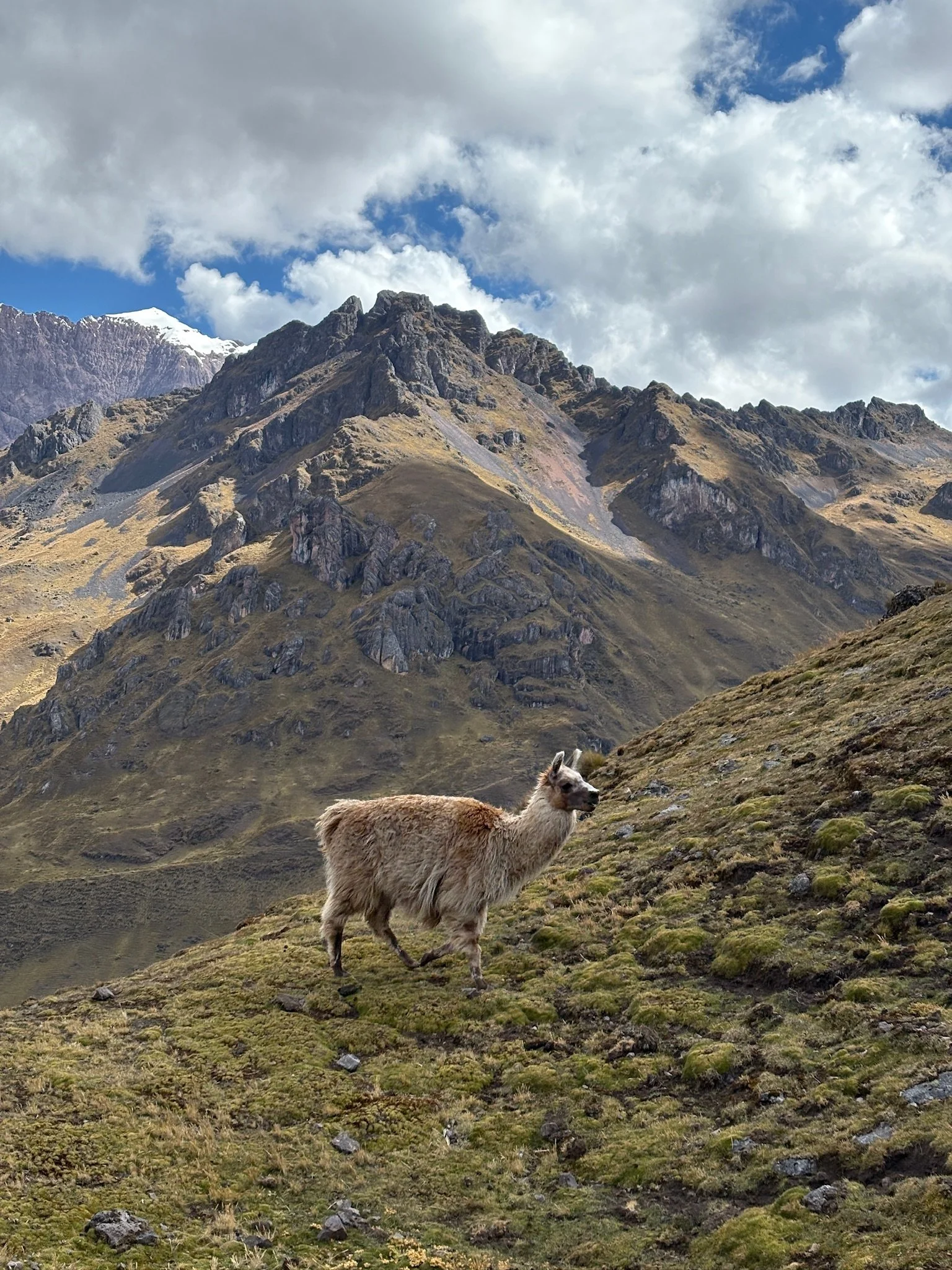
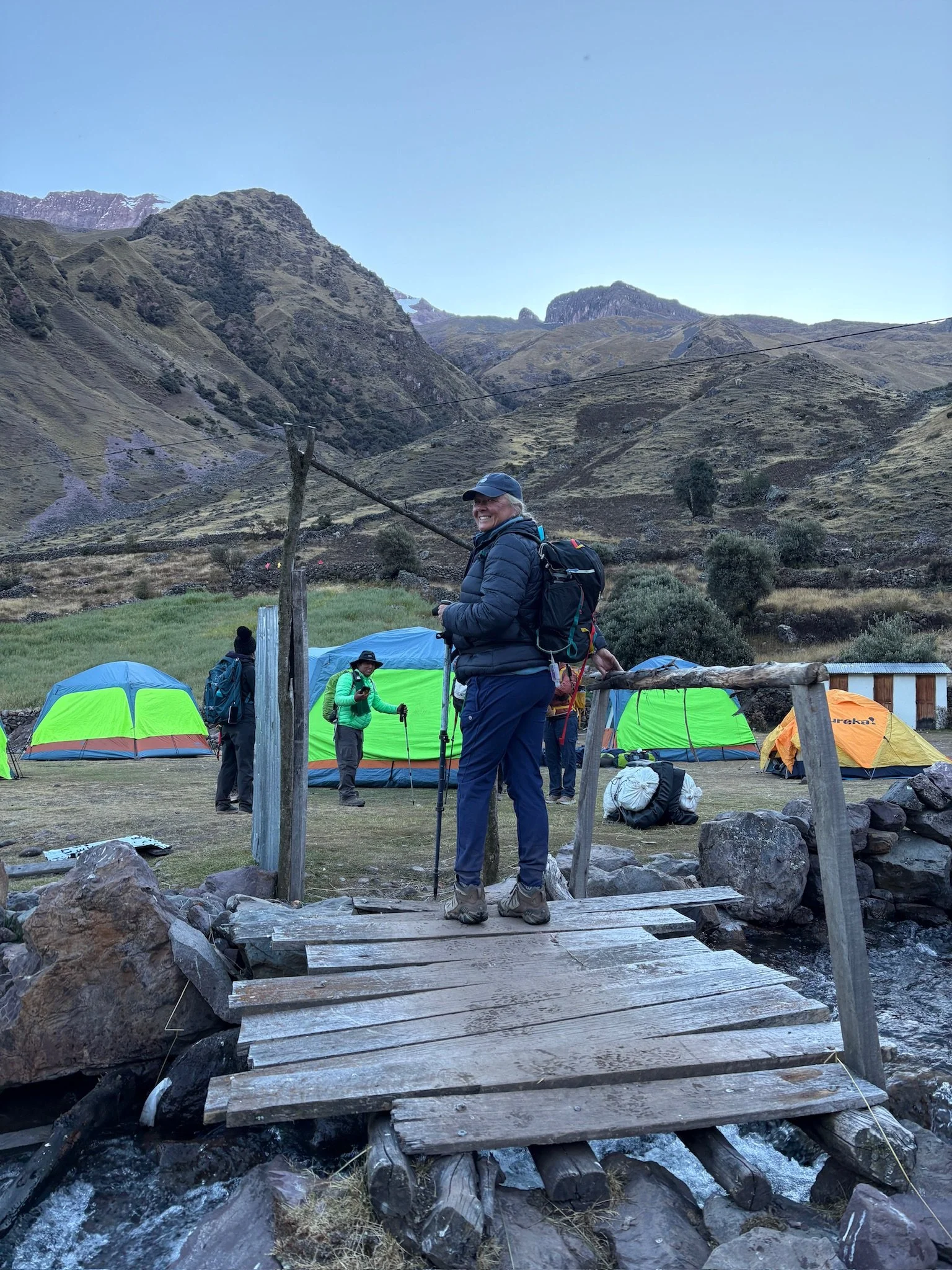
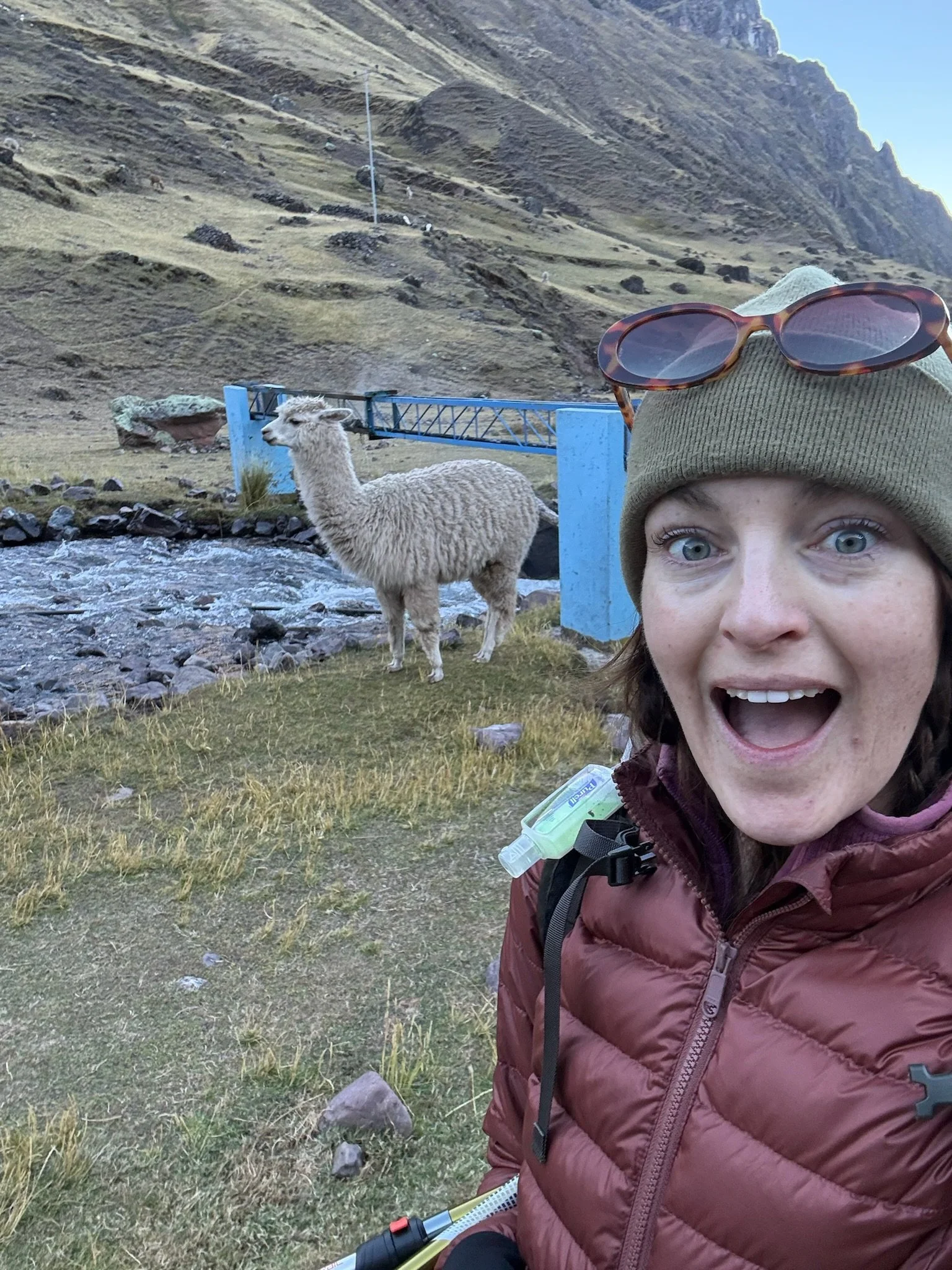
Itinerary
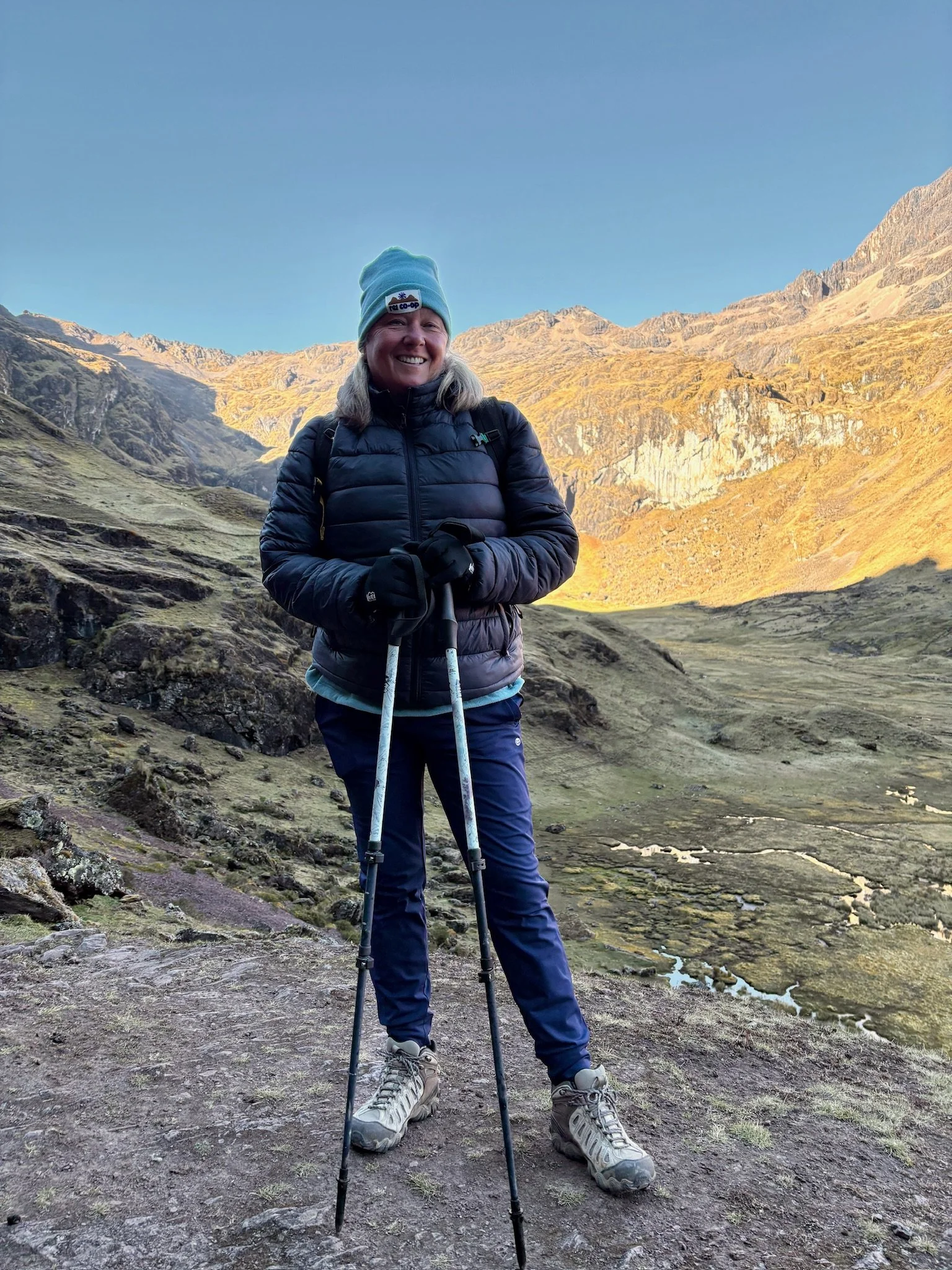
Early Morning Start ~ Trek 3 hours up to Condor Pass @ 15,354 ft, Trek 4 hours to Second Camp at Cancha Cancha Village @ 12,303 ft
Total Trek Distance: 8 miles
—
Journal Entry ~ Leigh Brooks
June 18th. My Birthday 🥳!
Since the Andes and Inca traditions are so rich with history, I wanted to start this blog by describing two ancient yet current traditions that the people of the Andean mountains still observe today. Pachamama refers in Andean tradition to “Mother Earth” — Offerings to Pachamama are traditionally acts of gratitude, respect, blessing, remembrance, or asking for safe passage.
An apacheta is a pile of stones found along mountain passes in the Andes. Travelers often add one stone as a symbolic act — leaving burdens behind, marking a passage, honoring a journey, expressing gratitude, or acknowledging the sacredness of the place. Mountain passes especially carry meaning because they represent crossing from one place or season of life into another.
Now to Day 2 (June 18) of our trek:
The night before we began our trek, I told my new trek friends that I had packed both of my husbands’ ashes with the intention that if the right place revealed itself, I would release the ashes somewhere meaningful.
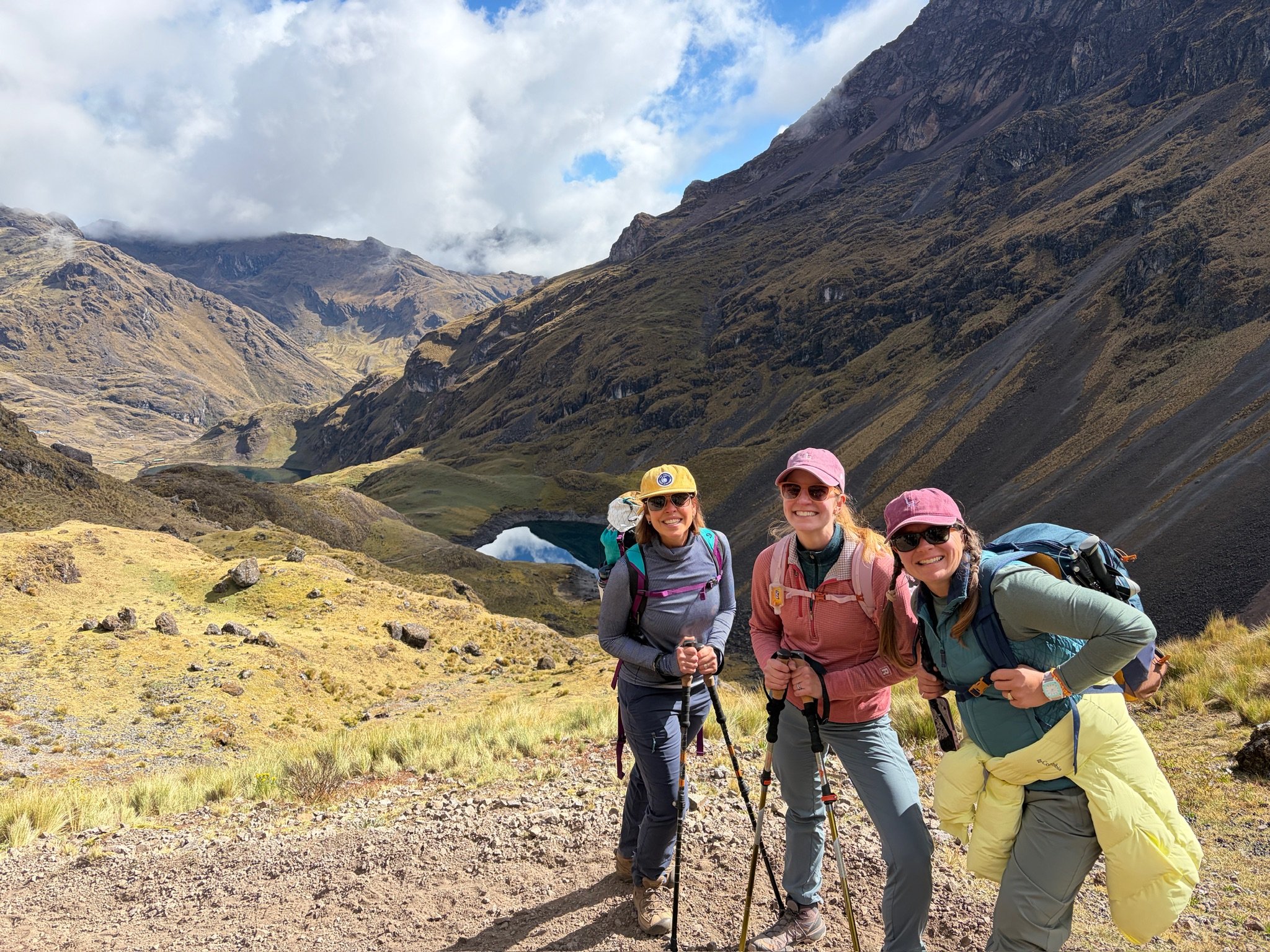
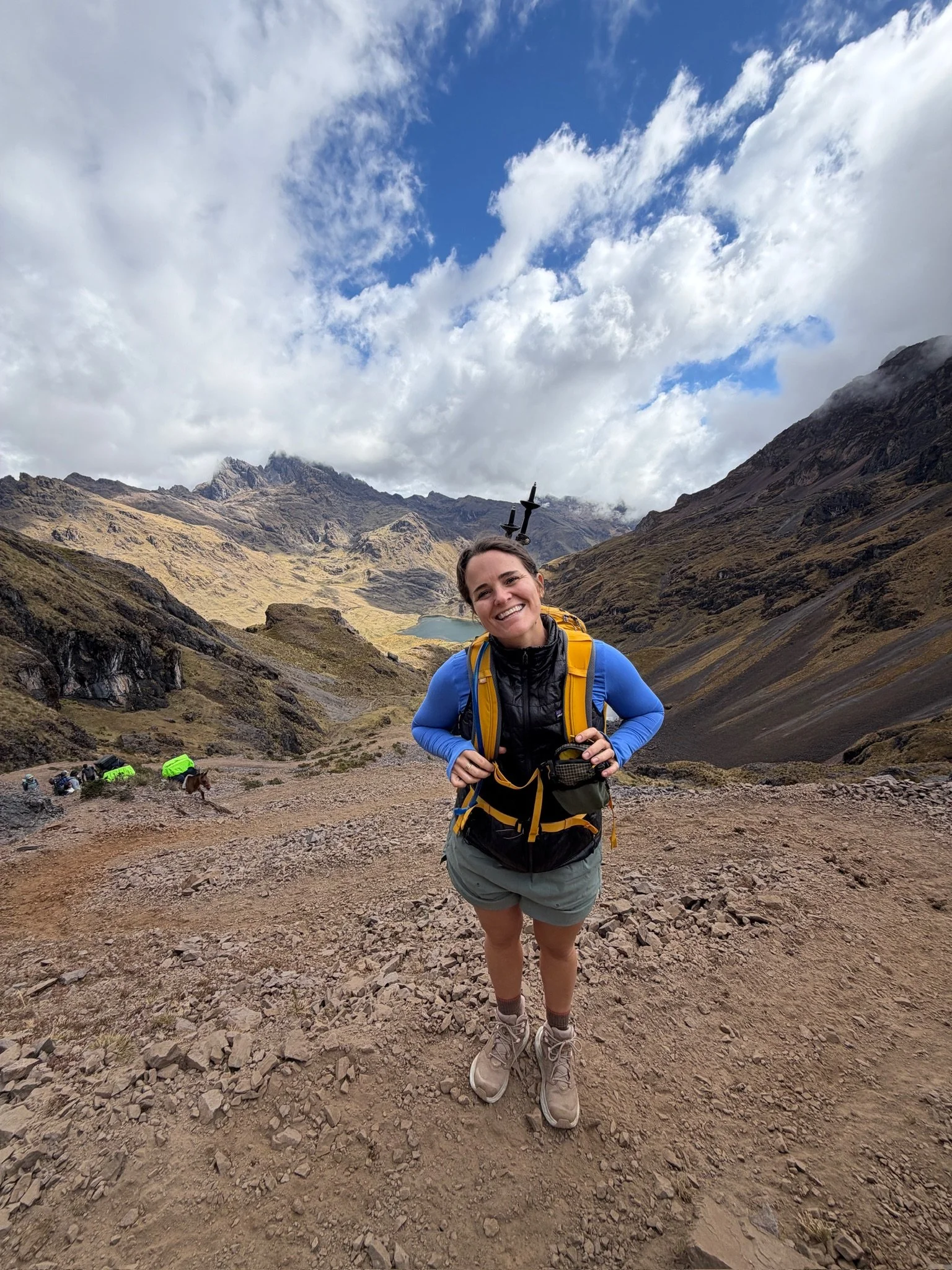
Today is the second day of our climb and would be the most challenging. The climb itself felt symbolic — steep, breathless, difficult in ways I hadn’t expected.
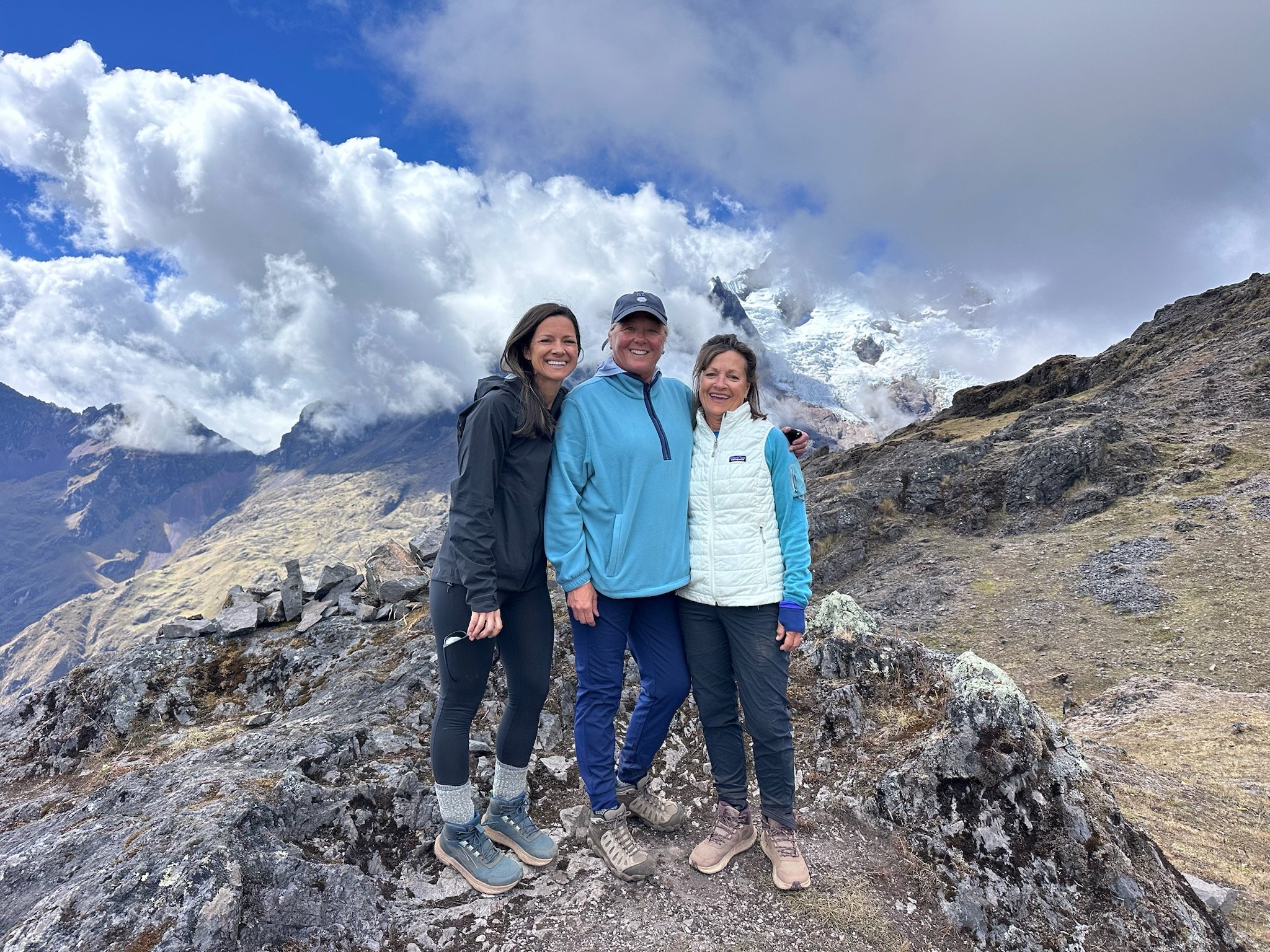
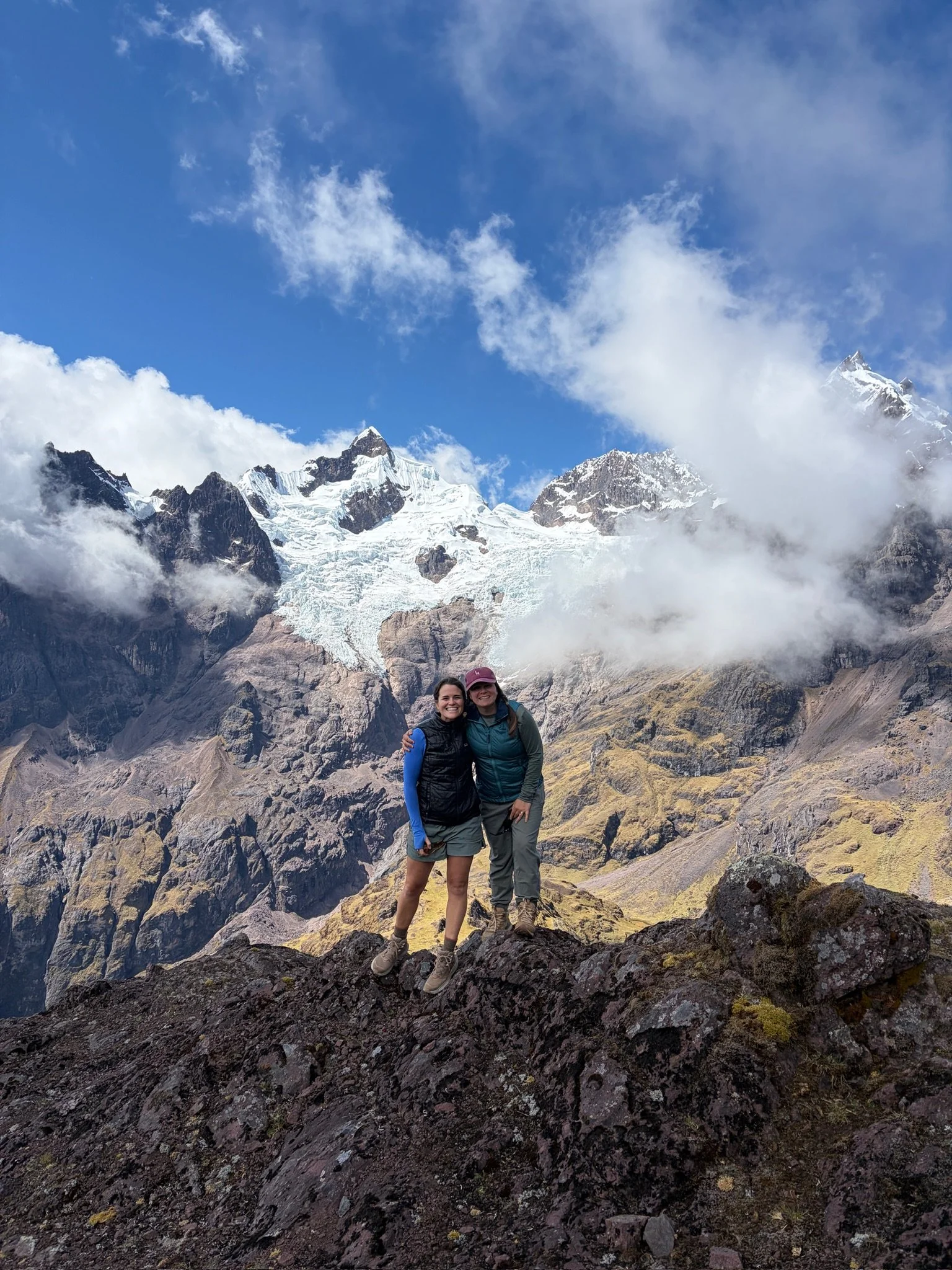
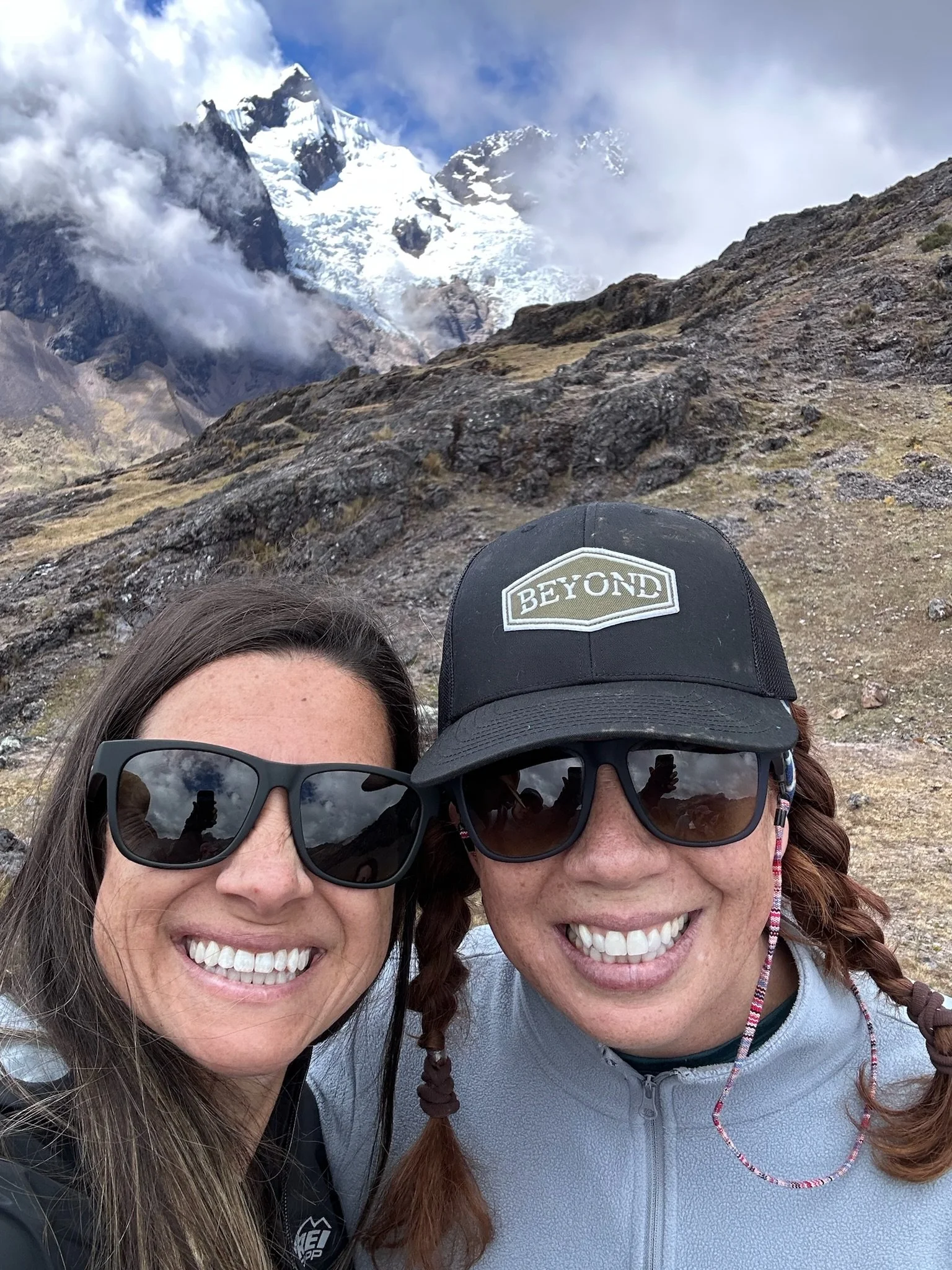
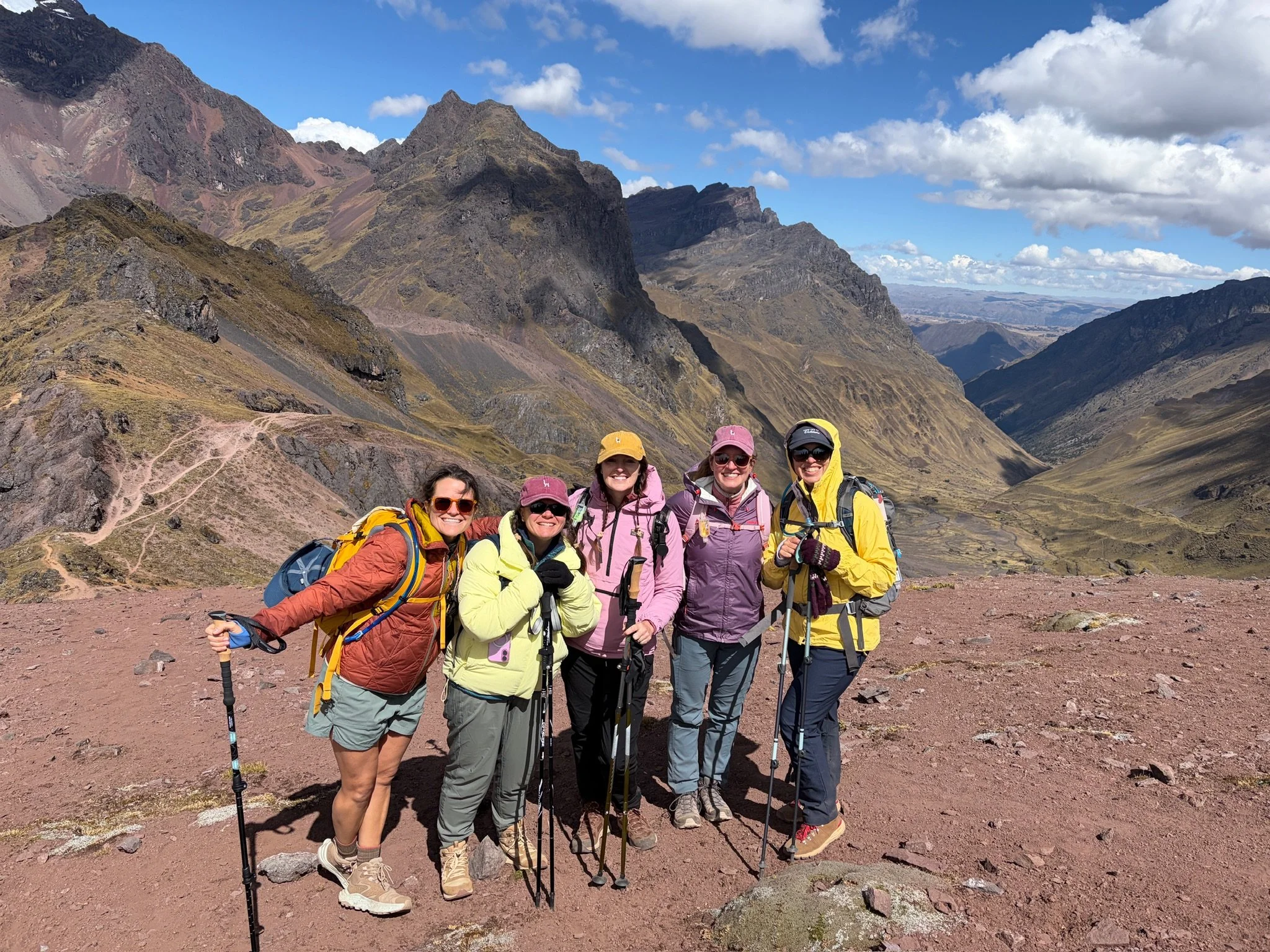
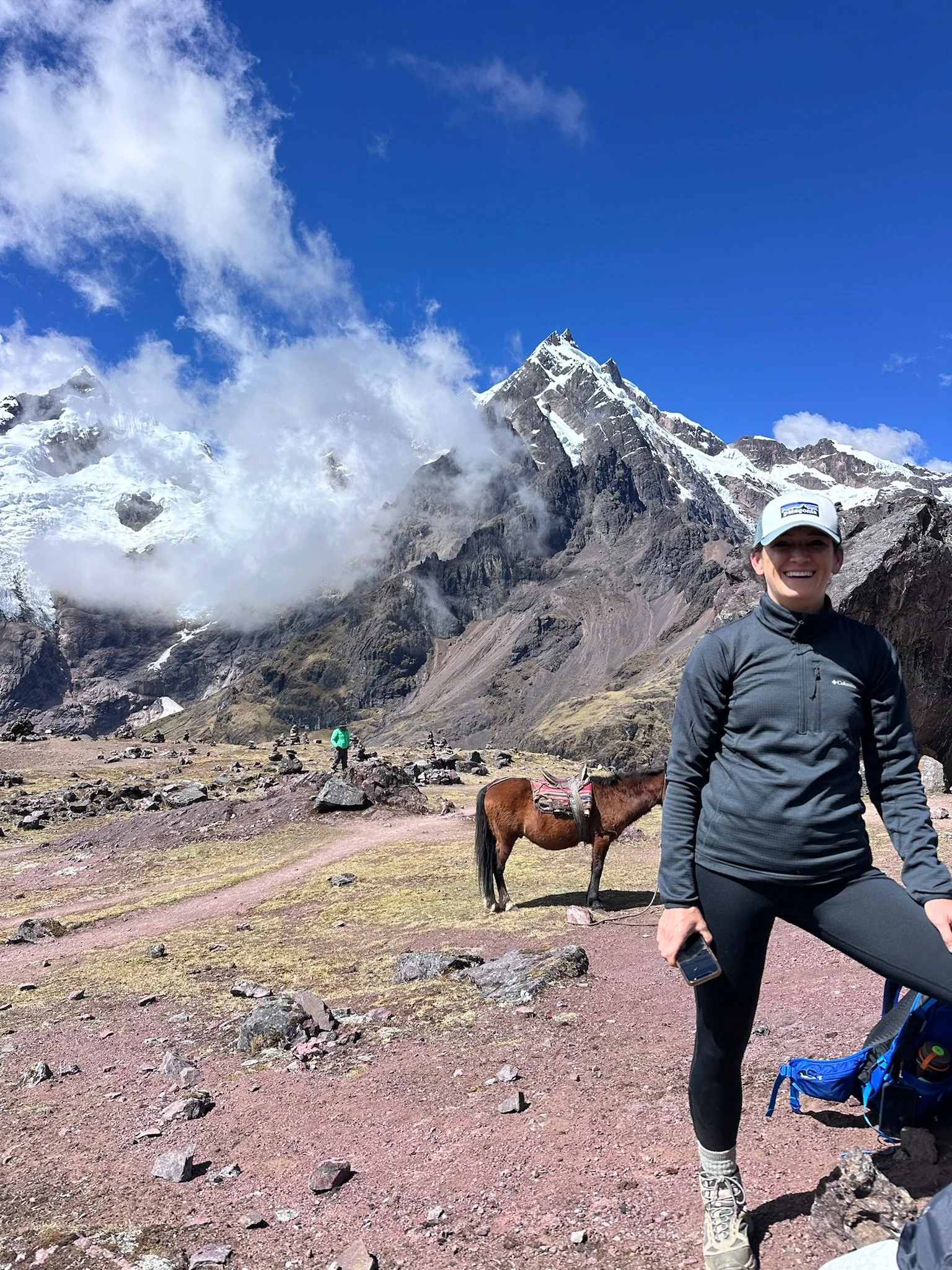
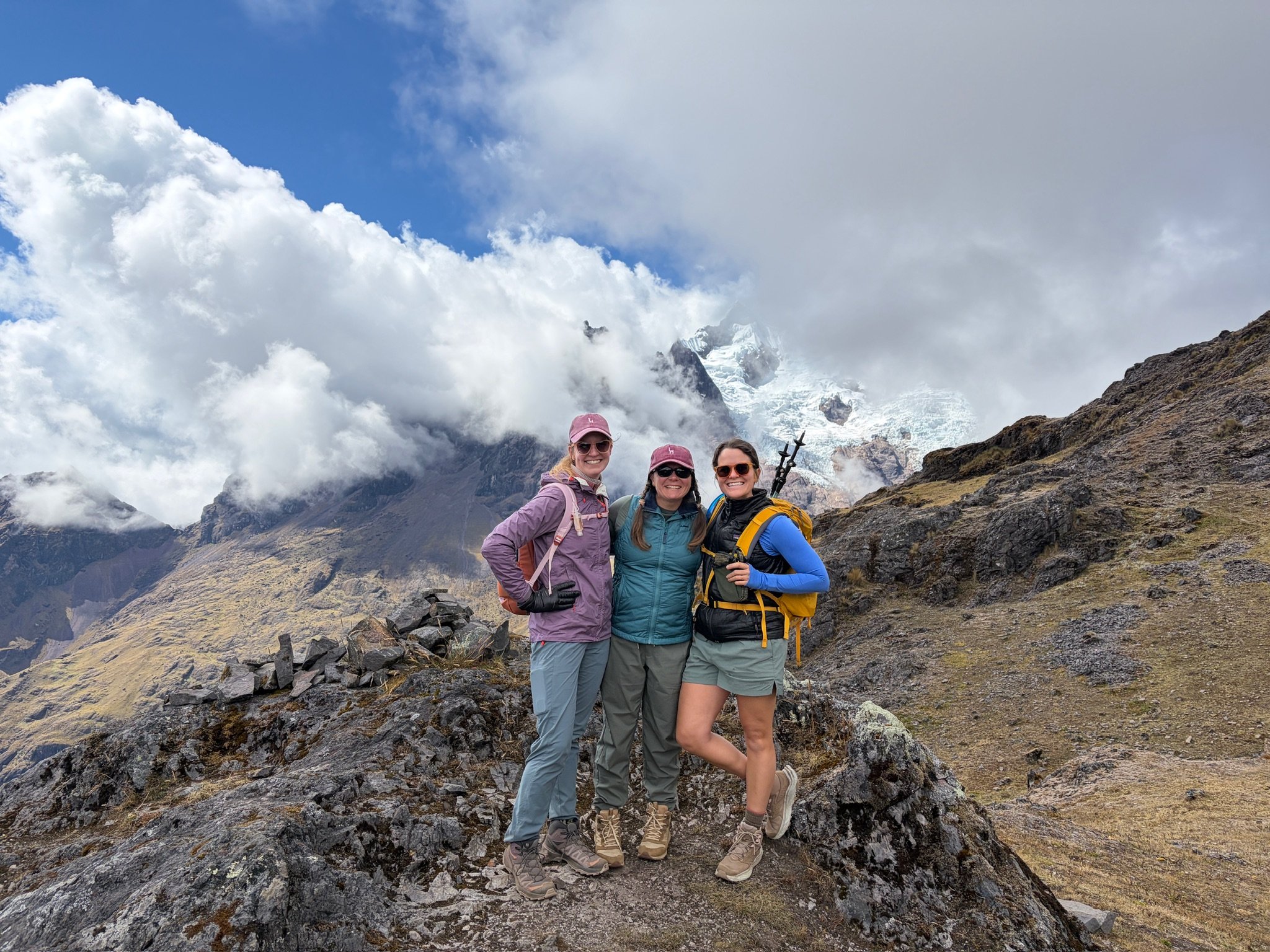
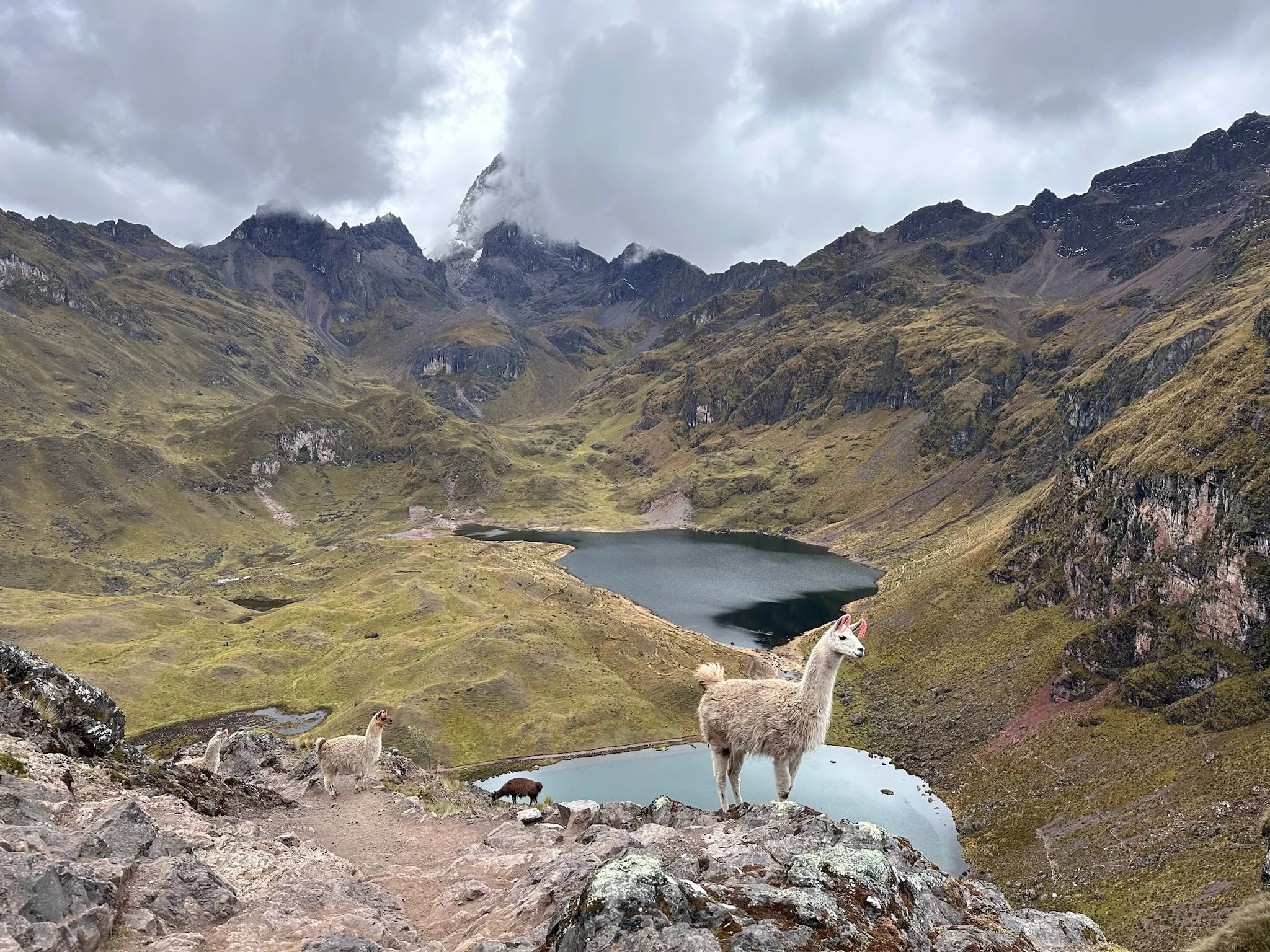
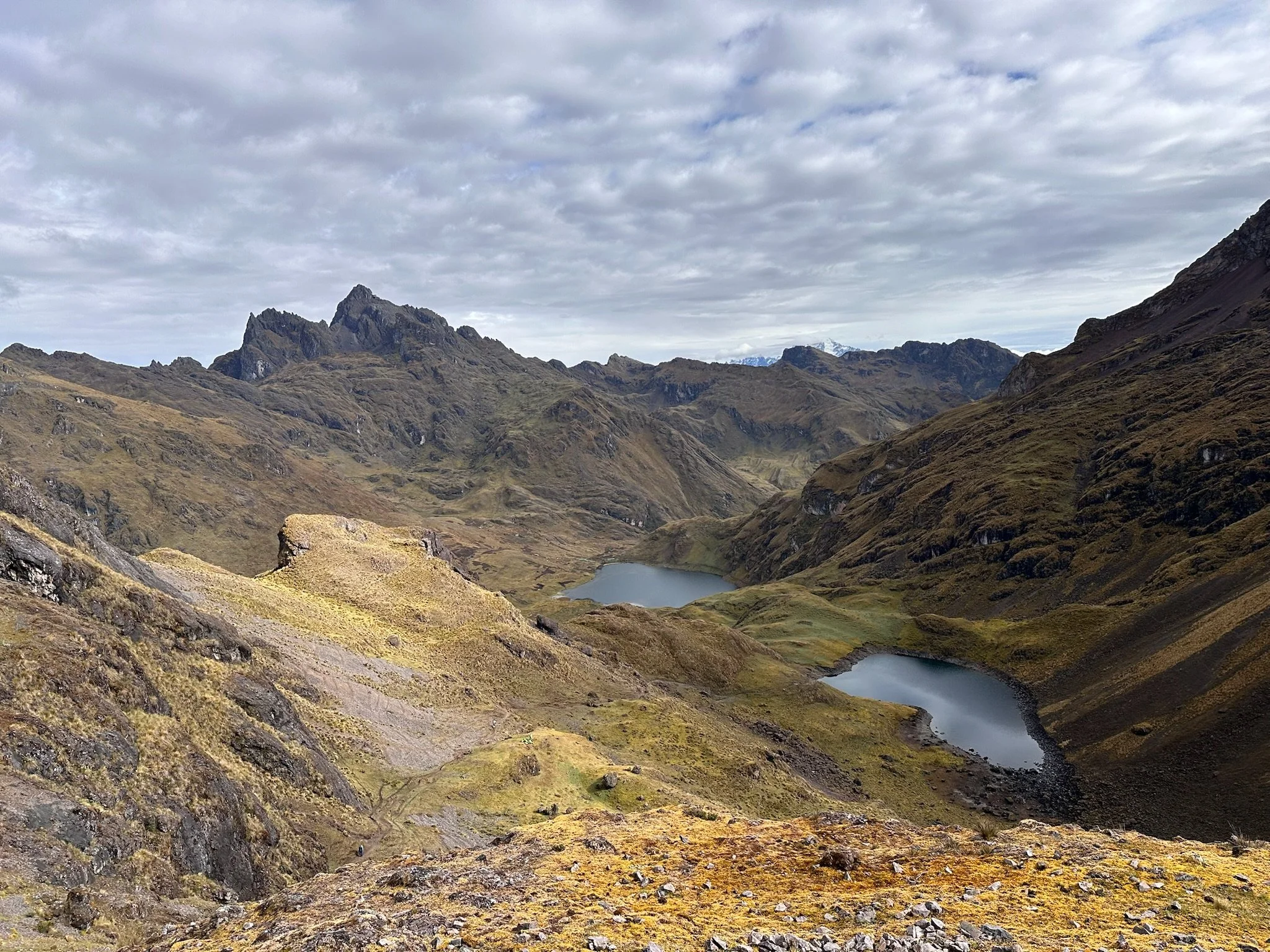
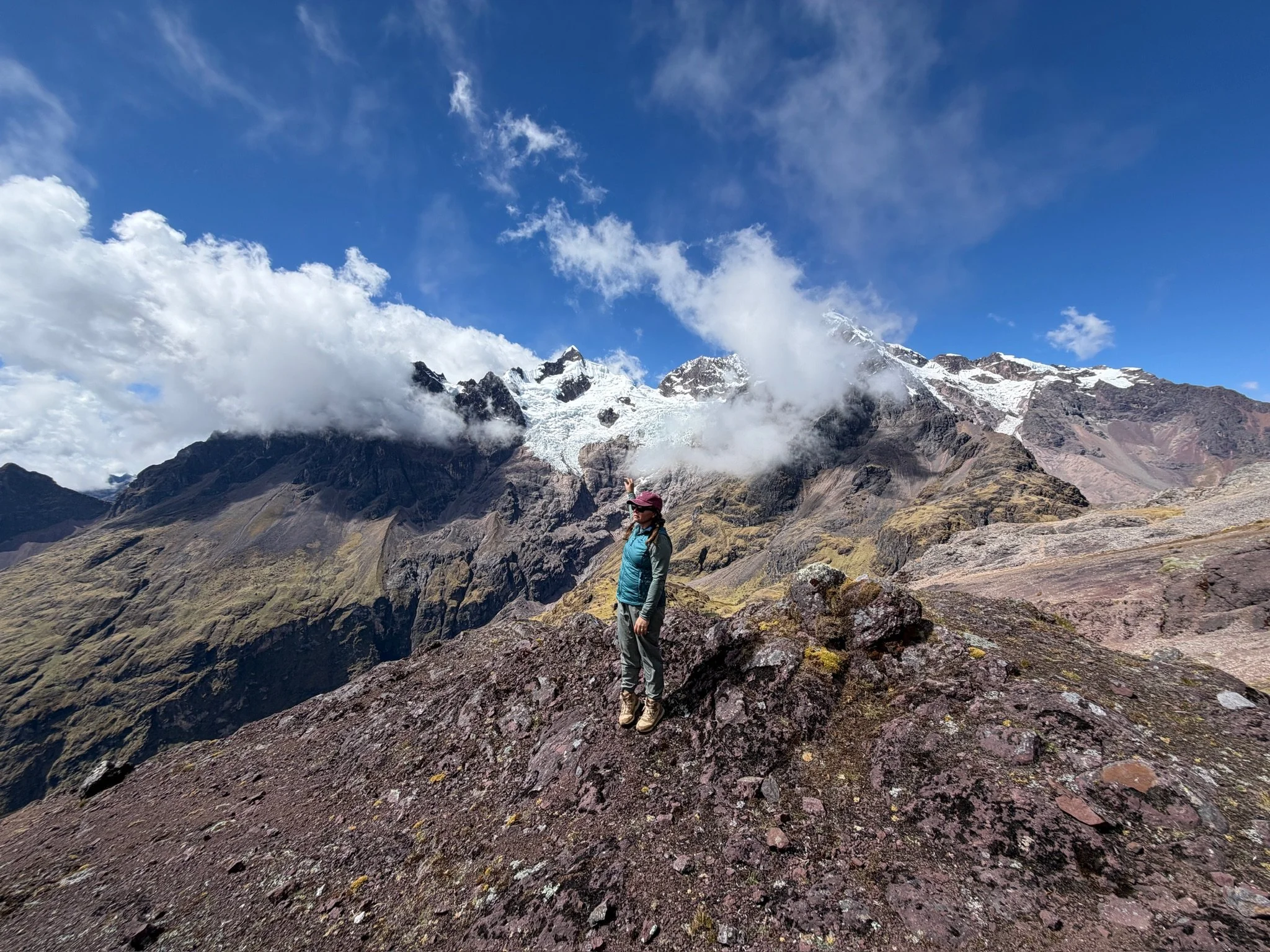
We reached the top of Condor Pass, (15,000 ft) surrounded by mountains in every direction.
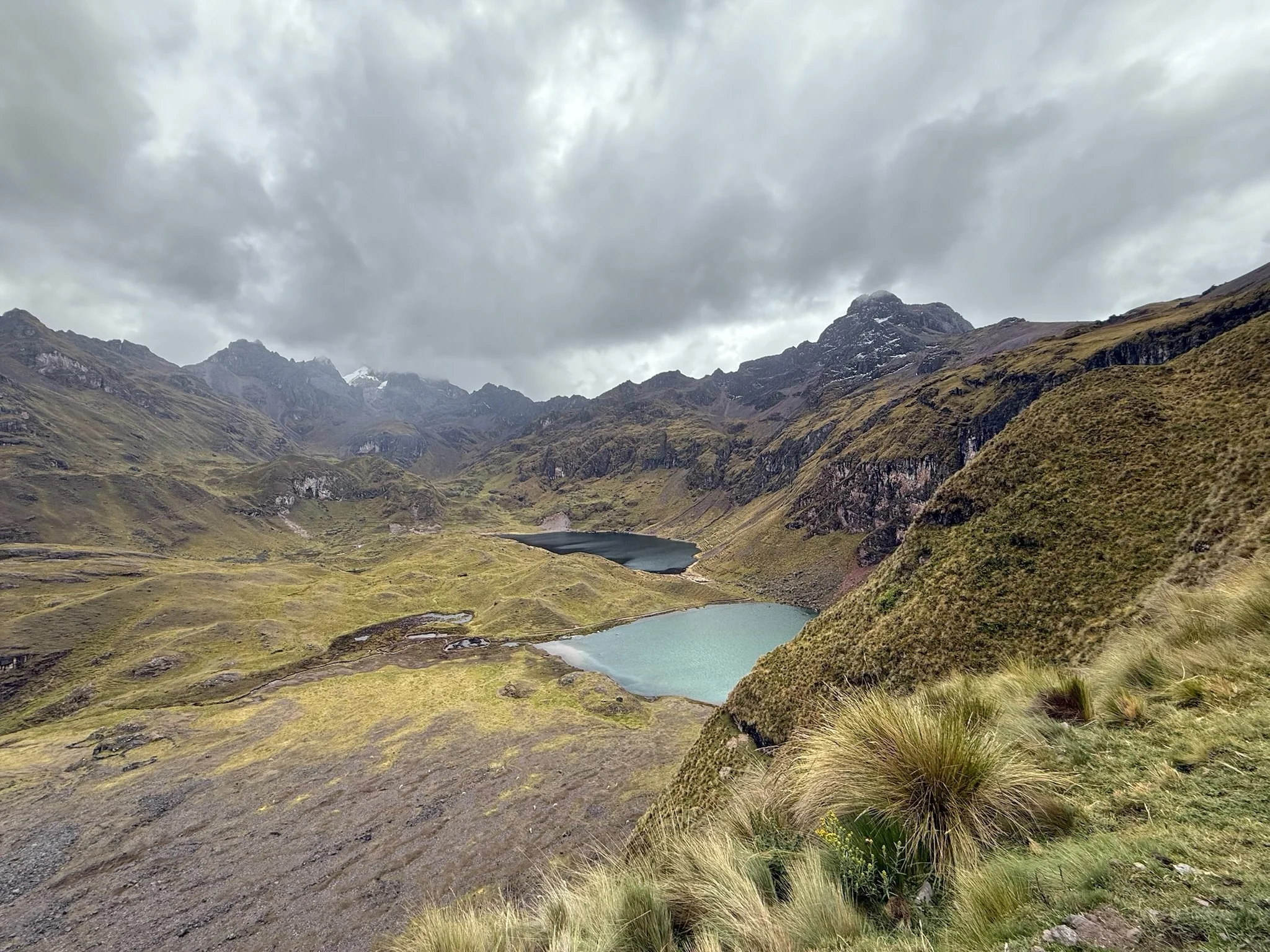
Looking across from the dry, arid ground that we were standing on we could see glaciated mountains and seasonal frozen waterfalls. High altitude creates dramatic contrasts: dry air and rocky terrain underfoot while snow and ice remain preserved at higher elevations.
Around us were many piles of apacheta, the Andean tradition of marking passage with stones.
This is the place Javi said was a meaningful spot for me to let go of the ashes.
Jenna Yannelit, spoke the ancient pachamama prayer using three coca leaves — a gesture of gratitude, remembrance, and honoring the journey.
Then, standing above the clouds, I released the ashes into the hole that Javi and Jenna Lee had dug in the earth while my friends prayed for me in their tender loving voices all at the same time. For me, the moment became less about ritual and more about witness — people I grew to love carrying part of my grief, speaking hope, and reminding me that love continues even when someone is gone.
One by one, each person placed a stone on “our” apachata. These stones became a visible reminder that grief does not have to be carried alone.
As we gathered our packs and started to begin our descent down, I realized I was carrying something different: gratitude, memories and hope. I looked back at the view of the newest apachata placed high above the clouds. I saw all that God had already provided — two men I loved and the life we shared, children, friendship, loss survived, and beauty I never expected to see.
Leaving the ashes there did not mean leaving them behind.
It meant releasing the need to keep carrying the weight of what could have been. It meant trusting that God still has places for me to go, people to love, beauty to notice, and a life still unfolding ahead of me.
The stones we left on the mountain became a marker — not of an ending, but of a crossing.
By this point in the trek, we understood and accepted the assignment: hike hard, breathe heavily, drink water, eat trail snacks, repeat. We had spent the afternoon congratulating ourselves for successfully removing and reapplying outerwear and locating scenic bathroom locations.
What we did not understand was that somewhere ahead of us, our support team of porters, chefs, and horsemen, had entirely different plans.
Each day when we finally stumbled into camp convinced we had accomplished something heroic simply by remaining upright, we would discover that camp had quietly transformed into what can only be described as Andean hospitality with unexpectedly high standards.
There were our tents with cots already set up.
There were chairs.
Actual chairs.
There was a dining area.
And not just a dining area — there was a dining table with a tablecloth.
A tablecloth.
At some point we stopped asking questions and simply accepted that apparently this is how one survives the Andes.
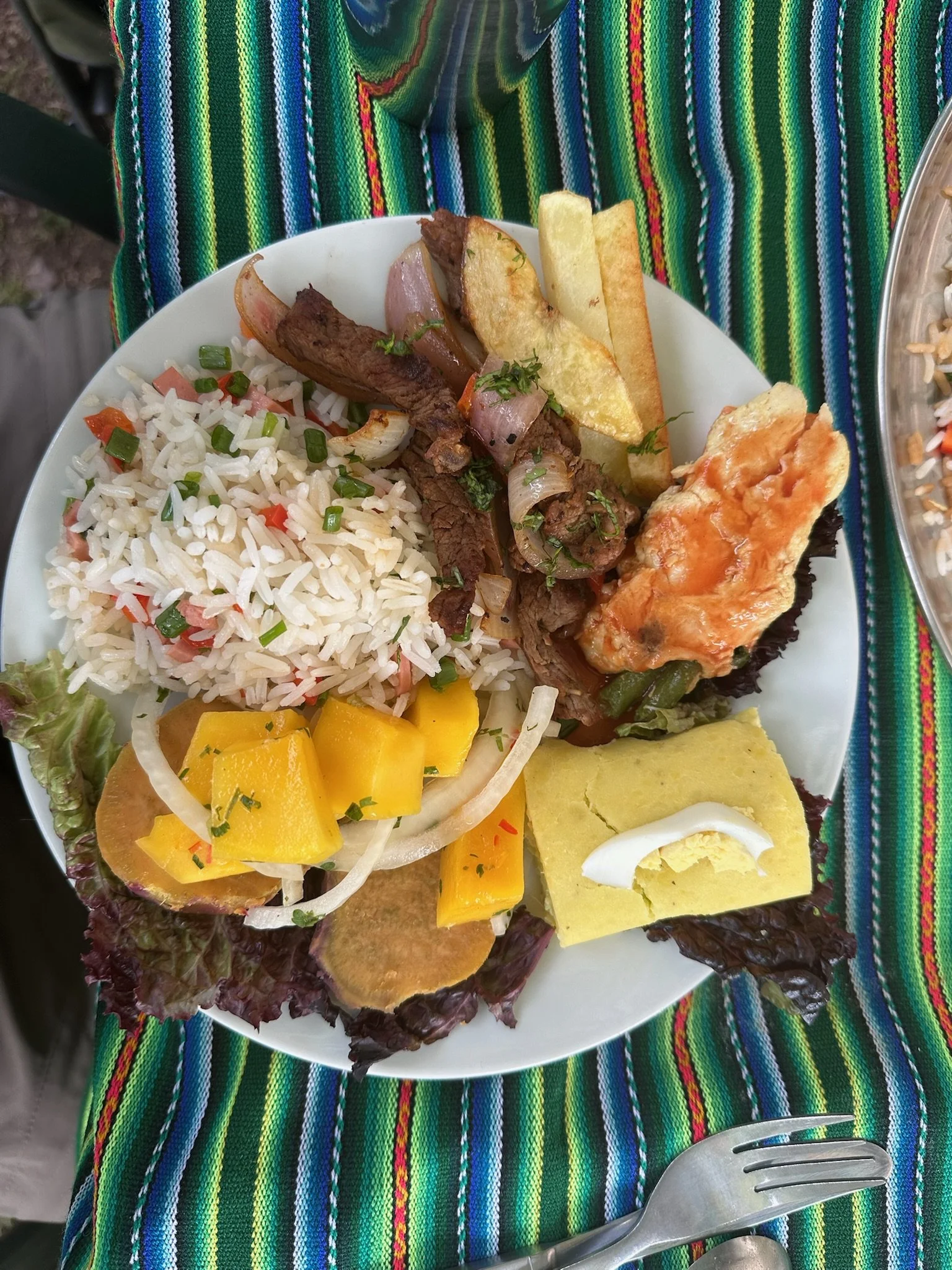
Then came the meals.
Warm meals.
Plentiful meals.
Delicious meals.
Meals that made us question every granola bar decision we had made earlier in the day.
And then my birthday cake arrived!
As if carrying tents, supplies, kitchen equipment, and creating warm meals at a high altitude wasn’t enough, our chef appeared with an actual birthday cake.
Not trail mix arranged in a circle.
Not a protein bar with a candle.
A real cake.
With frosting.
And personalization.
Somewhere in the middle of the Andes.
I still cannot explain how this happened.
There was something unexpectedly moving about being celebrated in such a remote place. Surrounded by mountains, tired legs, and people sharing the experience together, that cake felt like more than dessert.
It felt like one more reminder that joy has a way of showing up in places you never expected.
God provided not only endurance for the climb and meaning for the moment, but delight too.
Even in the middle of something physically hard, there was frosting.
-Leigh Brooks